
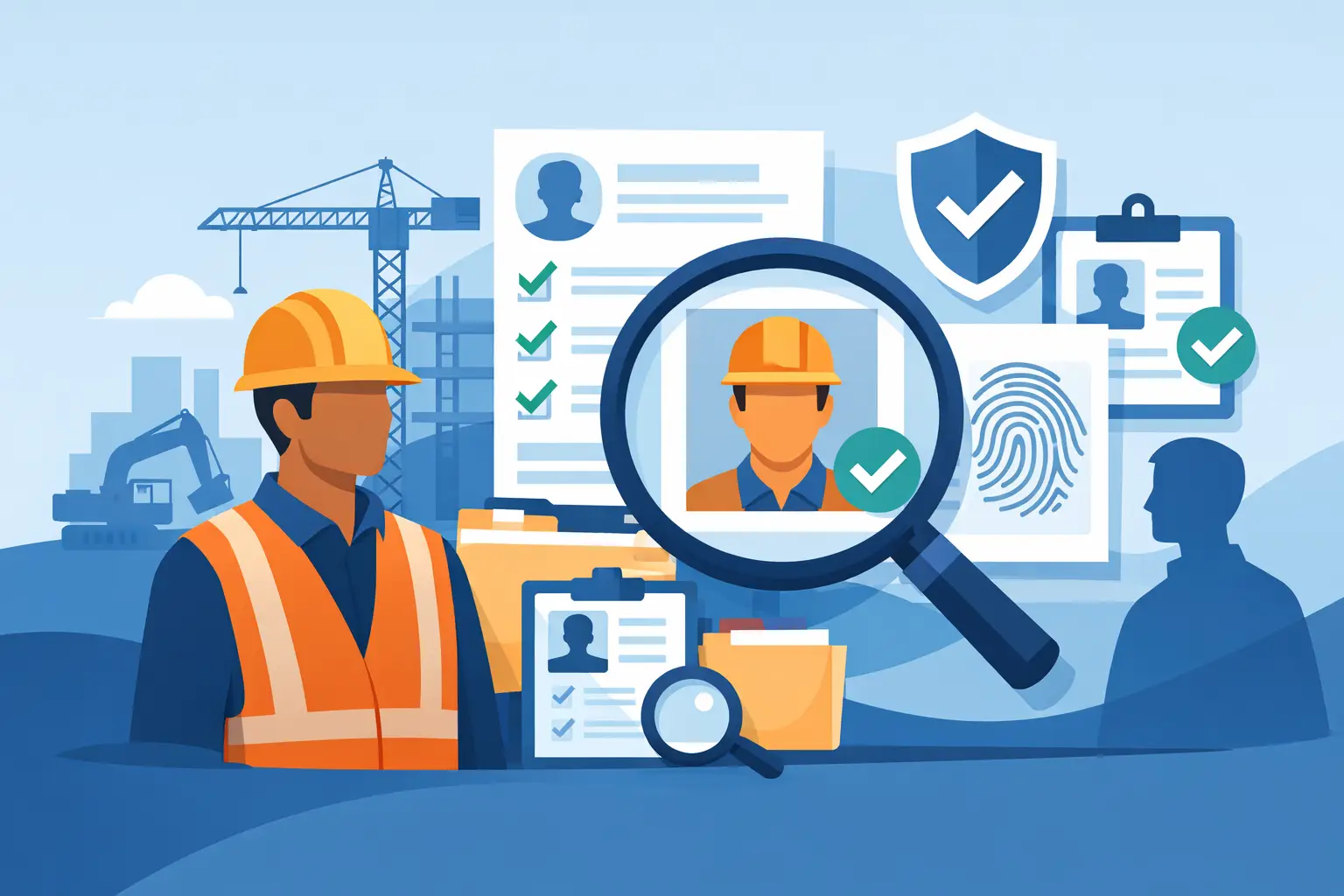
A resume can say journeyman electrician. A profile can claim ten years in commercial builds. But when the jobsite is active, the schedule is tight, and one bad hire can slow an entire crew, claims are not enough. Construction worker background checks give employers a clearer read on who they are bringing onto a site, into occupied buildings, and around expensive equipment, tight deadlines, and safety-sensitive work.
In construction, this is not just an HR box to check. It is a risk decision tied to safety, liability, customer trust, and project performance. The right screening process helps you hire faster with more confidence. The wrong one adds friction, creates false reassurance, or screens out good workers for the wrong reasons.
Why construction worker background checks matter more on jobsites
Construction hiring moves fast, but the stakes are high. Workers may have access to tools, vehicles, keys, materials, plans, and client property. They may work in schools, hospitals, government buildings, private homes, or occupied commercial spaces. They also work in teams where one unreliable person can create safety issues or drag down production.
That is why background checks in this industry carry a different weight than they do in many office roles. Employers are not only trying to confirm identity and reduce obvious risk. They are also trying to protect the site, the client relationship, the broader crew, and the timeline.
For many contractors, the biggest value is not catching dramatic red flags. It is reducing uncertainty. A verified work history, a validated license, or a confirmed record check can help a superintendent or hiring manager make a call faster when labor demand is high and the schedule will not wait.
What construction worker background checks usually include
Not every role needs the same level of screening. A residential remodeler hiring a carpenter for short-term framing work will not assess risk the same way a mechanical contractor hiring a driver-technician for occupied healthcare sites will. Still, most construction worker background checks draw from a similar set of screening categories.
A core check often starts with identity verification and criminal history screening where permitted by law. Employers may also verify past employment, licenses, certifications, and driving records if the role involves operating company vehicles or hauling materials. In some cases, education checks matter less than trade credentials, apprenticeships, or manufacturer certifications.
For skilled trades, credential validation often matters as much as criminal screening. If someone says they hold an electrical license, OSHA training card, or welding certification, that information should be confirmed. In construction, the risk of unverified skill is practical and immediate. It affects work quality, code compliance, rework, and safety.
Some employers also consider drug screening, especially for safety-sensitive roles. Whether that makes sense depends on the role, state law, customer requirements, union context, and company policy. There is no one-size-fits-all formula.
The trade-off: faster hiring versus deeper screening
Most contractors do not have the luxury of a three-week hiring process. They need labor now. That creates a real tension. The more checks you add, the slower the process can become. The lighter the process, the more risk stays unresolved.
This is where many teams get stuck. They either over-screen every applicant and lose good workers to competitors, or they under-screen to fill the gap and deal with the fallout later.
The better approach is role-based screening. Match the depth of the background check to the actual risk of the job. A general labor role on a closed commercial site may not require the same review as a service plumber entering customer homes, or a foreman managing access, vehicles, and crew leadership. When screening reflects real job conditions, it protects the business without creating unnecessary delays.
What employers should look for beyond the criminal check
A criminal background check can be part of the picture, but it should not be the whole picture. In construction, reliability and capability often matter just as much. Can this person actually do the work? Have they held the roles they claim? Do they have the credentials required for the trade? Have they shown up consistently in the past?
That is why a better hiring process combines background screening with skills visibility. Portfolios, work history validation, license checks, references, and project experience can all help separate a proven tradesperson from someone who just knows how to talk through an interview.
It also helps to understand context. A record alone does not always tell you whether someone is a current risk to the role. The nature of the offense, how long ago it occurred, whether it is job-related, and what the worker has done since then all matter. Smart employers build a process that is fair, compliant, and tied to the job itself.
Construction worker background checks and compliance
This is where speed can create problems if the process is loose. Background checks are regulated, and employers need to handle them carefully. Consent requirements, disclosure rules, adverse action procedures, state-specific restrictions, and fair hiring standards all come into play.
For employers, the key is simple: be consistent, be job-related, and use a compliant process. Screening every applicant differently based on instinct is risky. So is using broad exclusions that are not tied to the actual role.
Construction companies working across multiple states need to pay even closer attention. Screening rules are not identical everywhere, and hiring teams need a process that scales without creating legal exposure. A fast hire is not a good hire if the process puts the business at risk later.
How to make background checks work in a high-volume hiring environment
The best construction hiring systems treat screening as part of workflow, not a last-minute add-on. That means collecting the right information early, setting role-specific criteria in advance, and reducing back-and-forth between recruiters, operations, and candidates.
It also means not waiting until the final hour to verify what could have been confirmed upfront. If license status, employment history, or trade credentials are critical, those checks should happen early enough to affect the shortlist. That saves time and prevents wasted interviews.
Technology helps here, but only if it is built for the realities of field hiring. Generic recruiting systems often miss what matters most in the trades. Construction employers need a hiring process that surfaces verified skill, project history, and trust indicators quickly, while keeping communication moving on mobile.
That is one reason industry-specific platforms stand out. When worker profiles include validation, portfolios, and role-relevant details upfront, employers spend less time sorting and more time hiring. On a platform like go2work, that kind of verification is not separate from hiring. It is built into how contractors identify qualified talent faster.
What workers should know about construction worker background checks
For tradespeople, background checks can feel like one more hurdle in an already rushed hiring process. But they can also work in your favor when your record, credentials, and work history are accurate and easy to verify.
The strongest candidates do not just wait to be checked. They prepare for it. That means using a consistent work history, listing licenses correctly, being honest about gaps, and making sure certifications are current. If there is something in your background that may raise questions, it is often better to be ready to explain it than to hope it gets ignored.
Workers should also remember that background checks are only one part of the hiring decision. In construction, proof of work matters. Photos of completed projects, clear trade experience, endorsements, and verified credentials can carry real weight. Employers want confidence, and confidence comes from evidence.
A better standard for trust in construction hiring
Construction worker background checks are most useful when they support a bigger goal: building crews that are safe, qualified, and ready to perform. They are not a shortcut to perfect hiring, and they are not a substitute for checking skill, fit, and experience. But they are a practical tool for reducing risk in an industry where bad information gets expensive fast.
The companies that hire well do not rely on gut feel alone, and they do not bury themselves in slow, bloated processes either. They build a standard that fits the work, verify what matters, and move with urgency when the right person is in front of them.
That is the real value here. Not more paperwork. Better decisions when the schedule is tight and the next project is already starting.